El regalo a quienes amamos
Me siento tan mal en este momento que me quiero morir para no sentir. No, eso es mentira. Quiero vivir sin berrinches. Los míos. Quiero dejar de ser la persona que pierde el control, que se enoja con su situación —la que sea que tenga— y decide maltratar a quienes “más quiere” para descargar su coraje. Debería decir, no los que más quiero aunque lo sean, sino los que más están dispuestos a aguantar mi vómito, mi coraje, mi oscuridad, mi mierda. Ya sea un hijo que aguanta mi exabrupto, o una esposa que aguanta mi agresividad pasiva y mis malos tratos, ya sea un hermano que recibe lo que yo no sé procesar, solo porque encuentro en él lo que yo mismo quisiera tener.
Ese tipo de exabruptos son como un río de ácido que destruye todo a su paso. Un río que quema el amor de otros hacia mí, y que provoca huecos tan profundos en su ser que terminan por vomitar su propio río sobre los que ellos aman. Y así se reproduce. Porque no hago esto frente a desconocidos o amigos —no me atrevo— no tengo estas diarreicas intervenciones frente a quien sé que no estará dispuesto a aguantar mi acidez, mi mierda. No, se las hago a quienes supuestamente estoy dispuesto a dar la vida por su felicidad.
La realidad es que de alguna forma les estoy diciendo: te amo tanto, mira qué cosa tan podrida y fea tengo aquí, mira cuánta tristeza, cuánto odio, cuánta frustración he guardado, y mira cuánto me duele, cuánto me molesta. Aquí tienes —porque tú eres tan especial para mí— te lo regalo: te doy mi dolor, mi molestia, mi frustración, mi tristeza, mi odio. Todo en forma de un grito, o un reclamo, o una critica, algo que duela y lastime. ¿Acaso te lastima? No te preocupes, ya tendrás a alguien que te entregue el corazón, incluso inocentemente, y podrás también pasarle toda la mierda ácida y podrida que yo, con todo mi amor, te estoy pasando a ti ahora mismo.
¿Qué sería del mundo si yo no le hiciera esto a mis hijos, a mi esposa, a mis hermanos? ¿Qué sería del mundo sin este río ácido que, en vez de hablarse, expresarse, analizarse y desmenuzarse con la esperanza de diseccionarlo tanto que quede pulverizado por completo, termina guardándose y cargándose escondido bajo mi propia excusa de no saber hablar las cosas? ¿Qué sería del mundo sin esto?
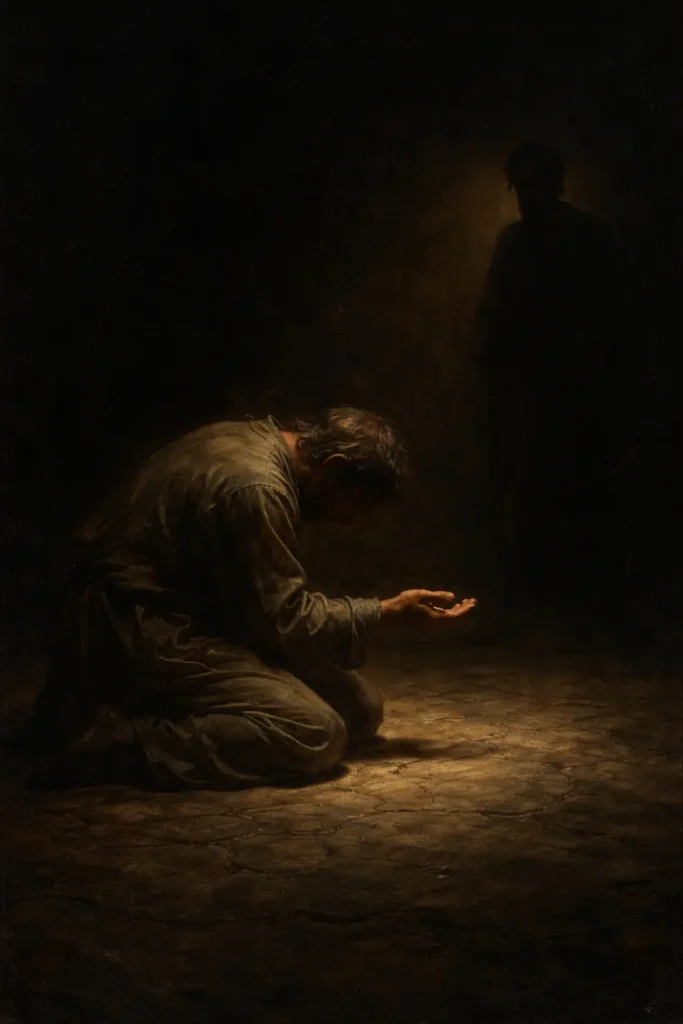
El perdón como eje de un posible final para este pensamiento es lo que queda en lugar del silencio. A ese perdón hay que llegar a través de la realización de que yo me equivoco. Que no soy tan infalible ni tan especial como para creer que mi propia mierda no apesta, olvidando la regla más importante de la vida: que toda la mierda de todo el mundo apesta. La mía también. Por eso el perdón es la herramienta y, realmente, el elemento disruptor de esta ilusión. Un perdón a quienes me hicieron su amable y pútrida donación, un perdón a mí mismo por lo que he cargado sin procesar, pero finalmente un perdón de rodillas, casi rogado, a quienes con amor inocente y bueno decidieron amarme tanto que, sin saber las consecuencias, recibieron, reciben y recibirán este especial y horripilante regalo mío.
Inténtalo conmigo.
Díselo a esa persona o personas, solo una vez.
Si se puede.
Dilo, cada vez.
PER-DÓ-NA-ME.
Perdóname.
…
…
The Gift for Those We Love
I feel so awful right now that I want to die just to stop feeling. No, that is a lie. I want to live without tantrums. Mine. I want to stop being the person who loses control, who rages against his circumstances —whatever they may be— and decides to mistreat those he “loves most” in order to unload his anger. I should say: not those I love most, even if they are — but those most willing to put up with my vomit, my rage, my darkness, my shit. Whether it is a child enduring my outburst, or a wife enduring my passive aggression and my mistreatment, or a brother who receives what I do not know how to process, simply because I find in him what I myself wish I had.
That kind of outburst is like a river of acid that destroys everything in its path. A river that burns the love others have for me, and that carves holes so deep in their being that they end up vomiting their own river over those they love. And so it reproduces itself. Because I do not do this in front of strangers or friends —I do not dare— I do not have these diarrheal interventions in front of anyone I know will not be willing to stomach my acid, my shit. No, I do it to the people I am supposedly willing to give my life for.
The reality is that in some way I am telling them: I love you so much, look at this rotten and ugly thing I have inside me, look at how much sadness, how much hatred, how much frustration I have been carrying, and look at how much it hurts me, how much it bothers me. Here, take it —because you are so special to me— I give it to you as a gift: I give you my pain, my irritation, my frustration, my sadness, my hatred. All of it in the form of a shout, or a grievance, or a criticism — something that stings and wounds. Does it hurt you? Don’t worry, you will find someone who gives you their heart, perhaps even innocently, and you will be able to pass along all the acid, rotten shit that I, with all my love, am passing on to you right now. What would the world look like if I did not do this to my children, to my wife, to my siblings? What would the world look like without this acid river that, instead of being spoken, expressed, analyzed and broken down with the hope of dissecting it so thoroughly that it ends up completely pulverized, ends up being stored away and carried in secret under my own excuse of not knowing how to talk about things? What would the world look like without this? Forgiveness, as the axis of a possible ending to this thought, is what remains in place of silence. To reach that forgiveness one must first arrive at the realization that I am wrong. That I am not so infallible or so special as to believe that my own shit does not stink, forgetting the most important rule in life: that everyone’s shit stinks. Mine too. That is why forgiveness is the tool and, truly, the disruptive element in this illusion. Forgiveness toward those who gave me their kind and putrid donation, forgiveness toward myself for what I have carried without processing, and finally a forgiveness offered on my knees, almost begged, to those who with innocent and genuine love decided to love me so much that, without knowing the consequences, they received, receive, and will continue to receive this singular and horrifying gift of mine.
Try it with me.
Say it to that person or those people, just once.
It can be done.
Say it, every time.
FOR-GIVE-ME.
Forgive me. —